


Abstract
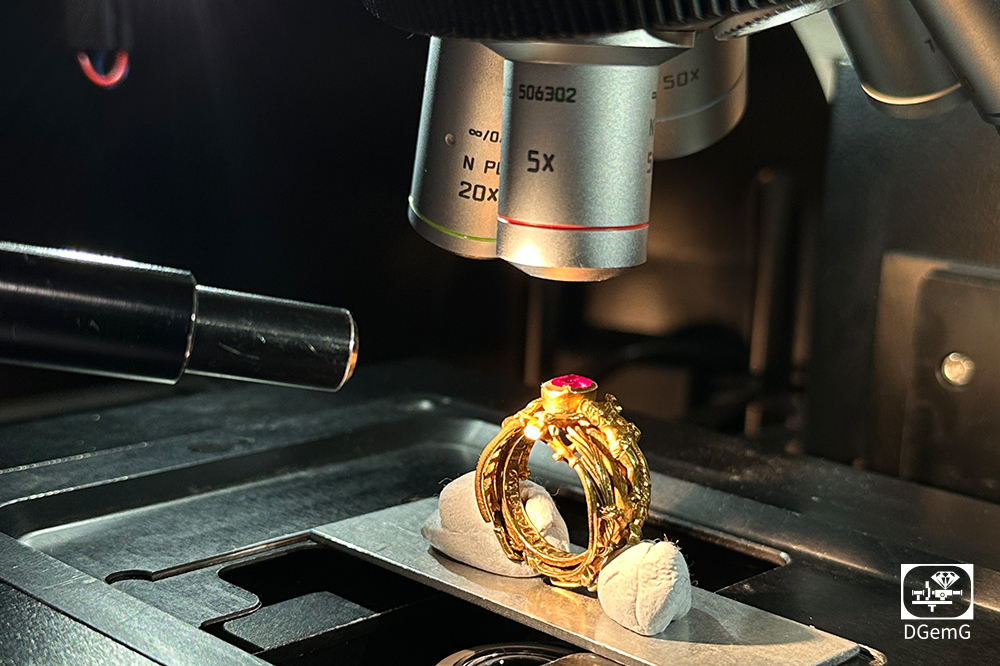
The present study is focused on the gemmological examination of the centre stone set in the wedding ring attributed to Katharina von Bora, wife of the German theologian Martin Luther (and hence dubbed Lutherring), preserved in the collection of the Stadtgeschichtliches Museum in Leipzig (Leipzig City Historical Museum), Germany. While the authenticity and history of the ring from around 1500 was well described and documented, the stone itself has not yet been studied by gemmological means. Combining the various spectroscopic and chemical analyses with standard microscopic and gemmological observations leads to the conclusion that the ruby in Martin Luther’s wedding ring has physical and chemical properties that are consistent with those of natural, untreated rubies from the Mogok region in Myanmar (Burma).
This case exemplifies how gemmological science can illuminate the intersection of material culture and personal history. Gemstones, unlike many cultural artefacts, do not degrade significantly over time; they endure as witnesses to the lives and legacies of their owners. When examined with care and context, such objects not only retain their intrinsic beauty but also serve as conduits for historical memory - a testament to the enduring cultural role of jewels through the centuries.
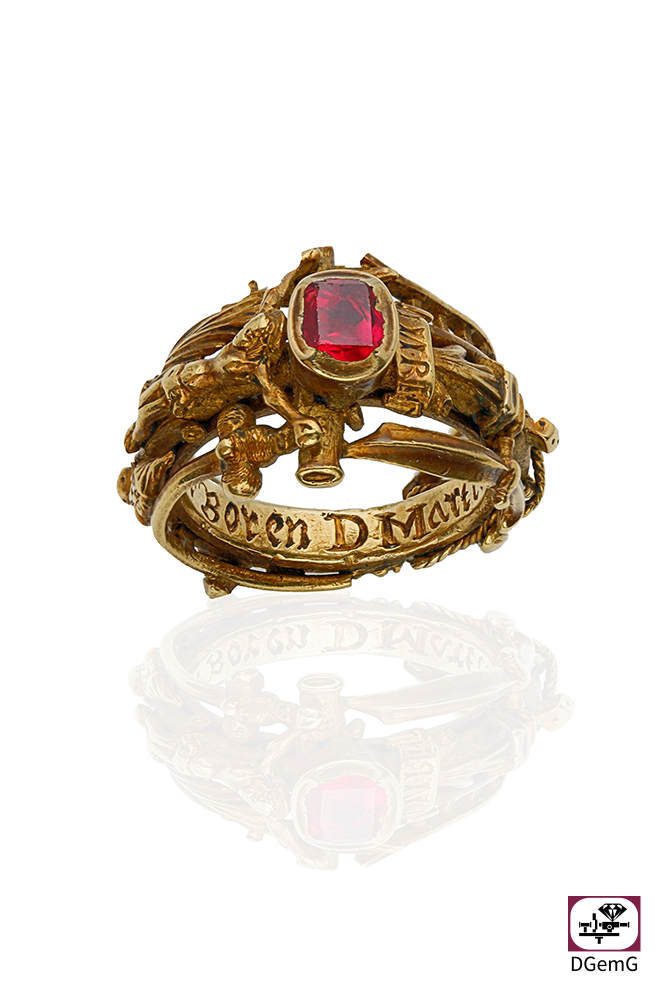 Ring of Katharina von Bora, called Lutherring, Photo: Q. Wang, DGemG
This article appeared in German language in our Journal. Members have access via our online archive
The journal is available in print for anyone interested:
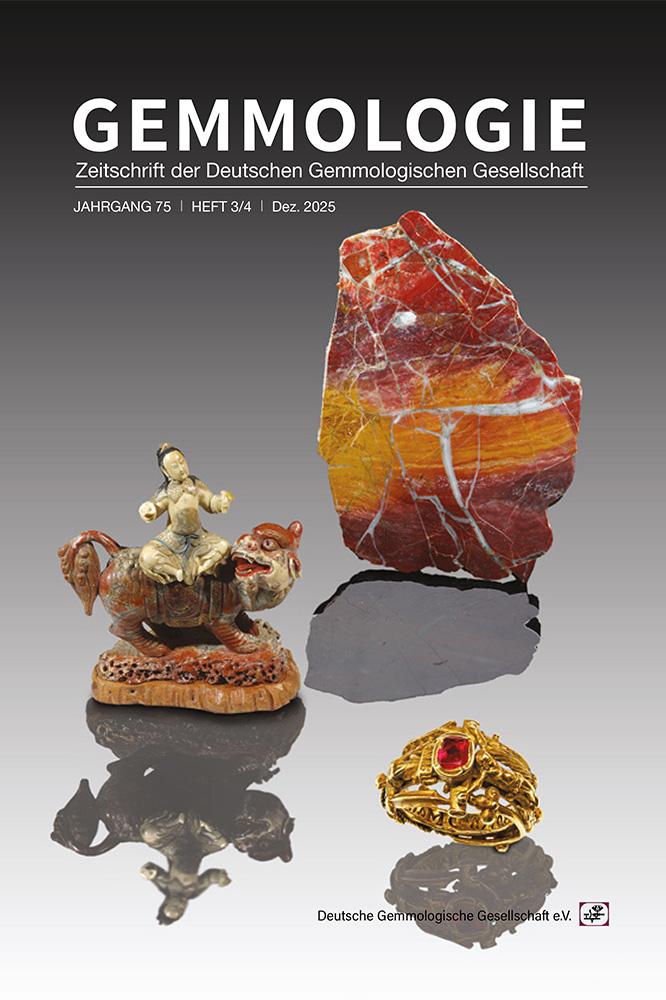
Contents of the 3/4 December 2025 issue
U. HENN
Die Edelsteine aus dem Steinkaulenberg, Idar-Oberstein
Eine mineralogisch-gemmologische Betrachtung unter besonderer Berücksichtigung der Farbursachen und Einschlussparagenese
U. KEMPE, D. WEBER, R. KLEEBERG, K. UNGER, A. MASSANEK, M. MROZIK, M. WAGNER
Über die Materialanalyse zur Herkunftsbestimmung chinesischer Specksteinfiguren
CLAUDIO C. MILISENDA, DANIEL NYFELER, ULRIKE DURA, KLAUS SCHOLLENBRUCH, JIN GUO und TAKAHITO MORI
Gemmologische Untersuchung des Rubins im Ring der Katharina von Bora („Lutherring“)