


Abstract
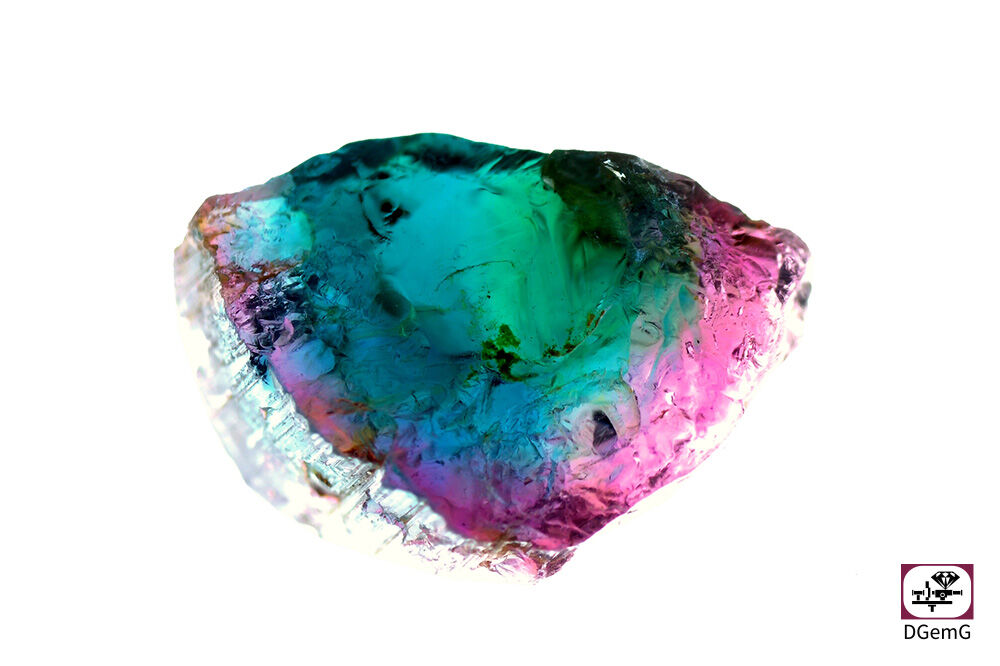
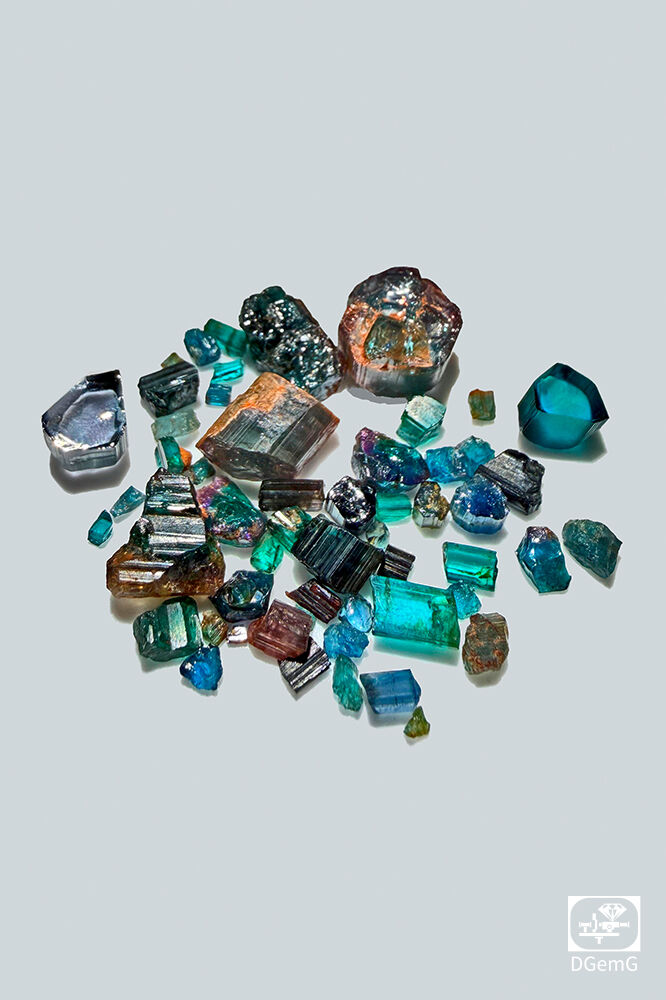
This study summarizes preliminary results on an examination of tourmalines from a new find near the village Abuloo in the Oromia Region in Ethiopia. Several analysed samples display absorption bands associated with divalent copper (Cu²⁺), characterized by maxima at approximately 720 and 920 nm, consistent with Paraíba tourmaline. The remaining specimens are either non-cuprian or exhibit iron concentrations that exceed their copper content. As a result, their absorption spectra are dominated by iron-related absorption features, and they are therefore not classified as Paraíba tourmaline. Chemical analyses indicate that the Ethiopian tourmalines are predominantly elbaite. Compared to Paraíba tourmalines from Brazil, however, they show, on average, higher concentrations of calcium (Ca), iron (Fe), gallium (Ga), and lead (Pb). These differences in trace element chemistry represent important criteria for characterizing and distinguishing the new deposit. We hope that future studies will confirm these initial findings, thereby ensuring that opinions regarding the origin of Paraíba tourmalines can continue to be made on a scientific basis.
This article appeared in German language in our Journal. Members have access via our online archive
The journal is available in print for anyone interested:
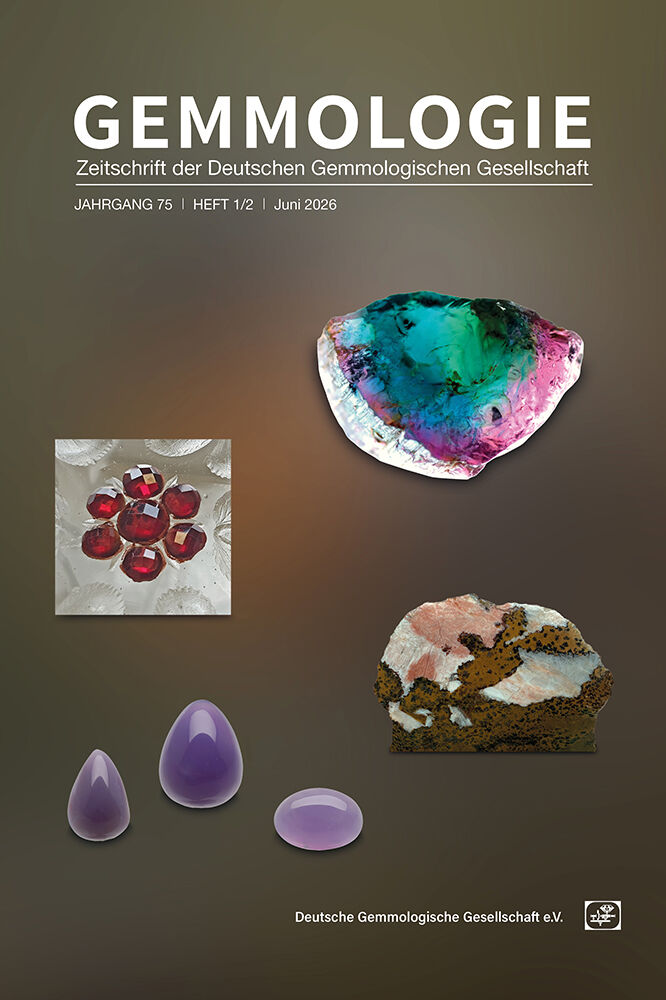
Contents of the 1/2 June 2026 issue
75 Jahre Zeitschrift der Deutschen Gemmologischen Gesellschaft
C. C. Milisenda und J. Guo
Neues Vorkommen kupferführender Turmaline in Äthiopien
K. Schmetzer
Böhmische Granate - Vorkommen, Gewinnung und Verarbeitung
U. Henn und R. Schmidt
Panthera-Jaspis aus Baumholder
U. Henn, T. Döbler, Q. Wang und T. Stephan
Purpur- bis lilafarbener Chalcedon aus Äthiopien
Angie Crabtree: Edelsteine auf der Leinwand
Ein Portrait der Künstlerin von B. Weninger