


Over the past few weeks, reports circulating on social media have suggested the discovery of a new occurrence of copper-bearing tourmalines in Ethiopia. The material has been described as closely resembling the now legendary Paraíba tourmalines from Brazil.
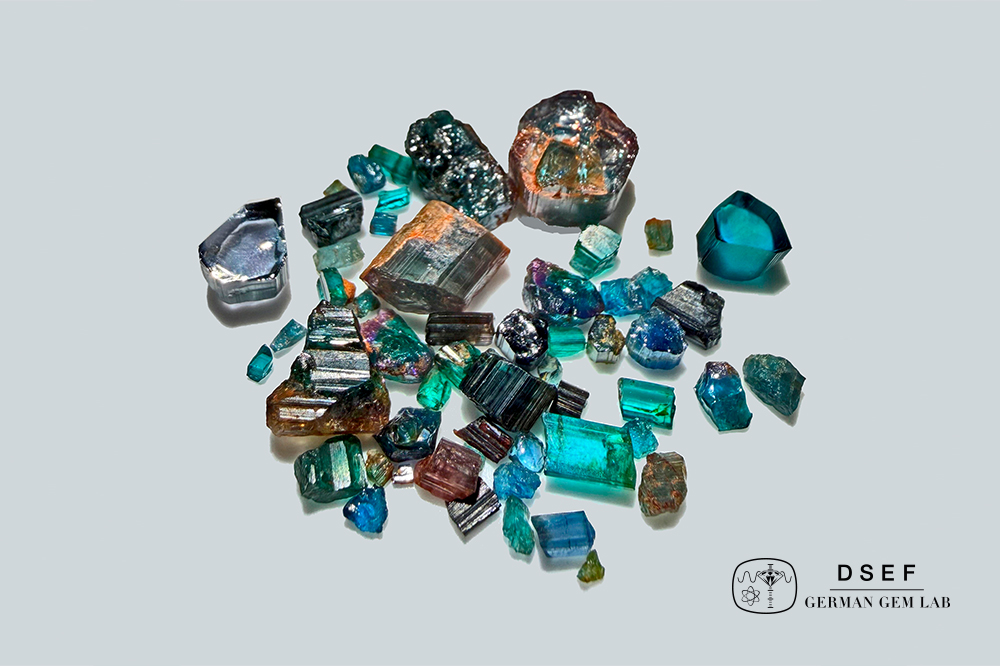
On Wednesday, 24 June 2026, DSEF German Gem Lab received the first lot of tourmaline crystals and crystal fragments (Fig. 1) respectively, as well as a faceted specimen of a saturated greenish-blue colour (Fig. 2), from the recently discovered deposit near the village of Abuloo in Ethiopia’s Oromia Region. The tourmalines most likely originate from syn- to post-metamorphic pegmatites that are related to the Pan-African orogeny.
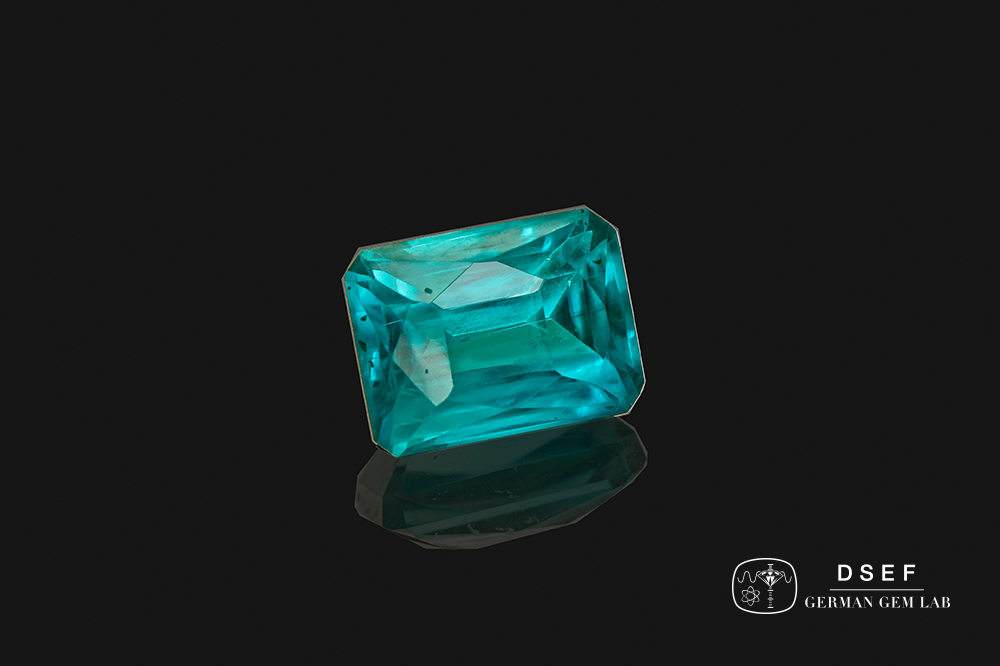 Fig. 2: Faceted Paraiba tourmaline (3.64 ct.) from Ethiopia.
The rough stones occur in violet, pink, greenish-blue, blue, bluish-green, green and yellowish-green varieties, as well as some multicoloured (green-blue-pink) specimens (Abb. 3). Based on their visual appearance some of the crystals are quite reminiscent of tourmalines from the Batalha mine in the Brazilian state of Paraíba and differ from the typically more strongly rounded specimens from deposits in Mozambique and Nigeria.
So far, we have examined around 50 samples. The preliminary results confirm initial studies by Pardieu et al. published on Instagram and LinkedIn on 26 June, according to which the new deposit yields tourmalines with an extremely heterogeneous chemical composition.
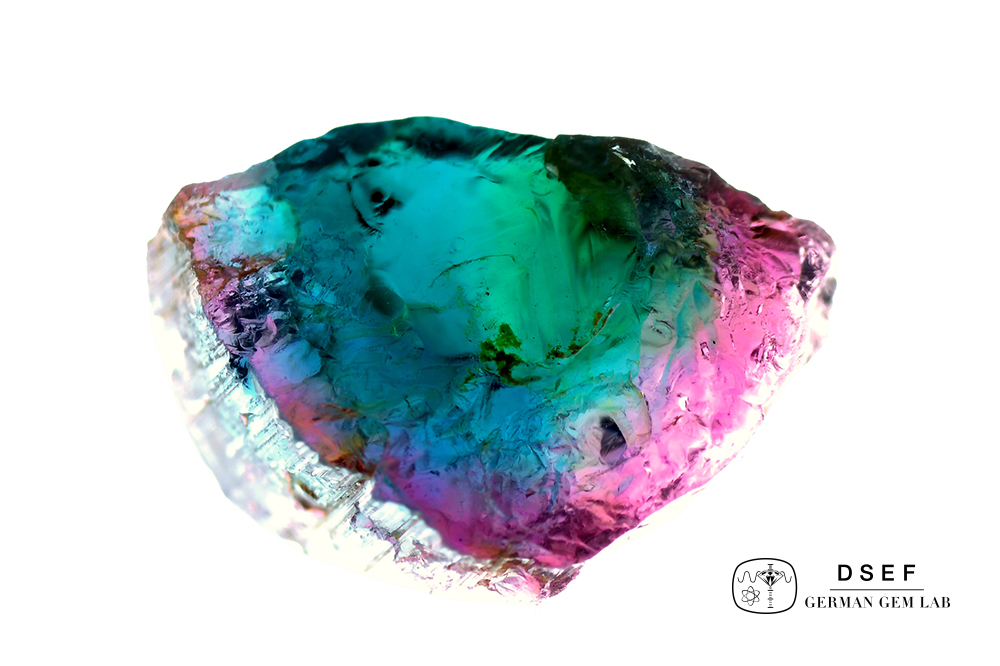 Fig. 3: Multicoloured, cuprian tourmaline from Ethiopia (0.29 grams).
A number of the analysed samples show absorption bands of divalent copper with maxima at around 700 nm and 900 nm, which are characteristic for Paraíba tourmaline. Some of these specimens show additional absorption maxima particularly at around 520 nm which is due to trivalent manganese.
The remaining specimens are either copper-free or contain higher concentrations of iron relative to their copper content. Due to the resulting iron-dominated absorption spectra, we do not classify these stones as Paraíba tourmaline (cf https://www.lmhc-gemmology.org/wp-content/uploads/2023/06/LMHC-Information-Sheet_6_V8_2023.pdf).
Chemical analyses indicate that the Ethiopian tourmalines are predominantly elbaite. Compared to Paraíba tourmalines from Brazil, however, they show, on average, higher concentrations of calcium (Ca), iron (Fe), gallium (Ga), and lead (Pb). These differences in trace element chemistry represent important criteria for characterizing and distinguishing the new deposit.
Another characteristic observed in some specimens was photoluminescence most likely induced by rare-earth elements. A comparable, but significantly more pronounced luminescence can also be found in copper-bearing liddicoatites from Mozambique. The combination of chemical composition and luminescence spectroscopy thus provides further criteria for determining the origin of these cuprian tourmalines.
We hope that future studies will confirm these initial findings, thereby ensuring that opinions regarding the origin of Paraíba tourmalines can continue to be made on a scientific basis.
Authors
Dr. Claudio C. Milisenda & Jin Guo
DSEF German Gem Lab
© 2026